Choosing an Imaging Scanner supplier is not just a search for the sharpest image or newest machine. For global buyers, the decision also affects installation, staff training, maintenance, software integration, and years of operating costs. The details matter: a scanner may fit the room but not the workflow, or meet clinical needs while leaving service gaps in a remote region. No shortlist is perfect.
Grand View Research’s Medical Imaging Market report estimated the global market at USD 39.3 billion in 2023 and projected continued growth through 2030. That expansion reflects demand across technologies such as MRI, CT, and ultrasound, but market growth alone does not identify the right supplier. Buyers should compare image quality, system uptime, cybersecurity support, interoperability, warranty terms, and the availability of local engineers. Ask for references from facilities using the same model under similar conditions. A polished demonstration is useful. Daily performance is better evidence.
Radiologist and Stanford professor Dr. Curtis Langlotz has said, “AI won’t replace radiologists, but radiologists who use AI will replace radiologists who don’t.” His observation highlights a broader point: scanner value increasingly depends on how hardware and software support clinical teams. The right choice is rarely the most impressive specification sheet. It is the system that performs reliably, fits the site, and can be supported over its full service life. The comparison that follows examines leading suppliers through that practical lens.
Imaging scanners convert paper, film, or selected objects into digital image files. A sensor records reflected or transmitted light, and software arranges it into a usable image. Flatbed scanners suit books and delicate pages; sheet-fed models handle stacks of invoices. Specialized systems can capture large drawings or three-dimensional surfaces. The right choice depends on the material, workload, and level of detail needed. Not every scanner does everything well.
Offices scan contracts, receipts, and forms for retrieval, archiving, or text recognition. Libraries may digitize fragile pages using supports that limit pressure. Technical teams can capture images for inspection and recordkeeping. Before a large batch, check resolution, color accuracy, file format, and feeder alignment. A skewed page can be harder to search. Optical character recognition helps locate words, but may misread handwriting, faded ink, or unusual layouts. Verify important fields.
For consistent results, clean the glass and rollers, scan a test page, and keep originals flat unless the device supports book scanning. Higher resolution creates larger files, not automatically better images. That trade-off matters. Calibration is easy to postpone, but it can affect consistency. Digitization also cannot restore missing context; clear file names and sensible access controls still matter.
| Scanner Type | How It Produces Images | Common Uses | Typical Supplier Offerings | Key Buyer Considerations |
|---|---|---|---|---|
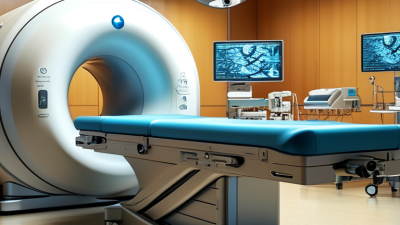
| Magnetic Resonance Imaging (MRI) | Uses a strong magnetic field and radiofrequency pulses to create detailed images, especially of soft tissues. It does not use ionizing radiation. | Brain and spine imaging, joint assessment, and examination of organs and soft tissues. | Scanner systems, magnetic-field and radiofrequency components, patient tables, imaging software, installation, and service support. | Check site shielding and room requirements, magnet strength, bore size, available clinical applications, staff training, and ongoing service coverage. |
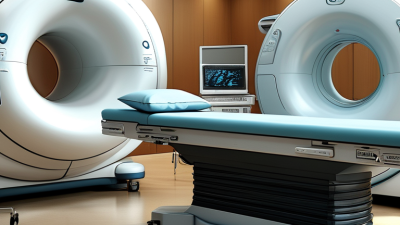
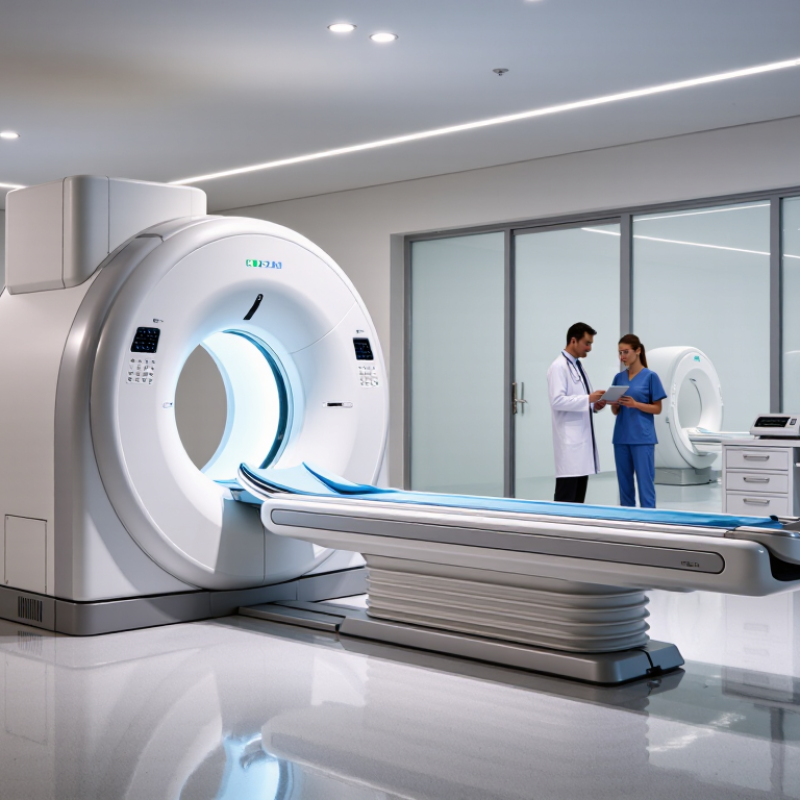
| Computed Tomography (CT) | Rotating X-ray equipment collects measurements from multiple angles; a computer reconstructs them into cross-sectional images. | Trauma assessment, chest and abdominal imaging, bone evaluation, and image-guided procedures. | CT systems, X-ray tubes and detectors, reconstruction software, dose-management tools, installation, and maintenance. | Compare slice capability, scan speed, dose-management features, room and power requirements, workflow compatibility, and service response times. |
| Digital X-ray | X-rays pass through the body and are recorded by a digital detector to produce projection images. | Chest examinations, bone and joint imaging, and routine diagnostic radiography. | Fixed or mobile X-ray units, digital detectors, image-processing software, positioning accessories, and technical support. | Assess detector size, mobile or fixed configuration, image workflow, radiation-safety provisions, local installation requirements, and replacement-part availability. |
| Ultrasound | A transducer sends and receives high-frequency sound waves; returning echoes are processed into real-time images. It does not use ionizing radiation. | Pregnancy care, abdominal and pelvic examinations, cardiac imaging, and guidance for selected procedures. | Portable or cart-based systems, transducers, imaging software, batteries or carts, accessories, and user training. | Match transducer types and applications to clinical needs; consider portability, image quality, cleaning requirements, connectivity, and warranty support. |
| Positron Emission Tomography (PET) | Detects signals from a small amount of injected radiotracer to show biological activity; PET is often combined with CT or MRI for anatomical context. | Oncology imaging, selected neurological studies, and evaluation of some cardiac conditions. | PET or combined imaging systems, acquisition and reconstruction software, workflow integration, installation, and specialist service. | Review radiotracer access and handling requirements, facility design, regulatory compliance, system uptime, operating costs, and staff expertise. |
| Optical and 3D Scanning | Uses cameras, structured light, or laser-based methods to capture surface shape and visible detail; it does not image internal anatomy. | Object measurement, product inspection, dental and facial surface capture, and documentation of physical spaces. | Handheld or stationary scanners, capture software, calibration tools, accessories, and integration support. | Specify the required accuracy, capture volume, surface materials, file formats, software compatibility, calibration process, and intended environment. |