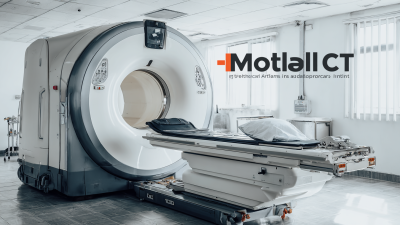
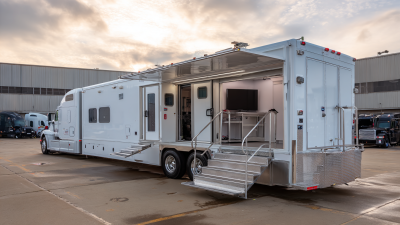
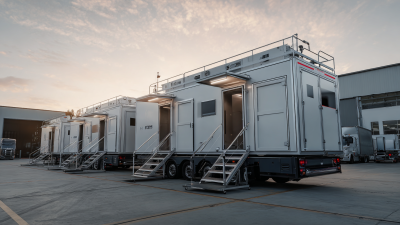
Choosing among the top mobile CT rental companies requires more than comparing daily rates. Global buyers must assess equipment quality, service coverage, delivery planning, and clinical suitability. A reliable Mobile Ct Rental provider should clearly explain scanner specifications, image performance, installation requirements, and expected uptime. These details matter when a unit must support emergency imaging, outpatient care, or a temporary hospital expansion.
Experience often appears in practical details. Can the company position a mobile CT trailer on a restricted site? Does it provide trained engineers, application support, and rapid maintenance? Buyers should also examine detector technology, slice configuration, radiation-dose management, workflow software, and compatibility with existing PACS systems. Strong providers document calibration, preventive maintenance, cleaning procedures, and operator training. They do not hide limitations.
Global purchasing adds another layer. Import procedures, electrical standards, site access, insurance, data security, and local medical-device requirements can affect the project. A low quotation may exclude transport, setup, permits, staffing, or emergency callouts. That is where comparisons become less simple. Rental availability can change quickly, and company reputations may vary by country. Independent references and recent customer feedback are valuable, although they are not perfect evidence.
This guide examines leading providers through a practical buyer’s lens. It considers transparency, technical competence, geographic reach, responsiveness, and total rental value. The strongest choice may not be the cheapest. It should fit the facility’s workload, timeline, budget, and patient-care standards. Buyers should verify every critical claim before signing. Small oversights can become expensive delays.
The global CT rental market is shaped by uneven imaging access, not equipment demand alone. The WHO and World Bank’s 2023 Universal Health Coverage report found that 4.5 billion people lacked full access to essential health services. CT capacity remains highly concentrated in wealthier urban systems. WHO Global Health Observatory data also shows uneven reporting across countries, making simple global comparisons unreliable.
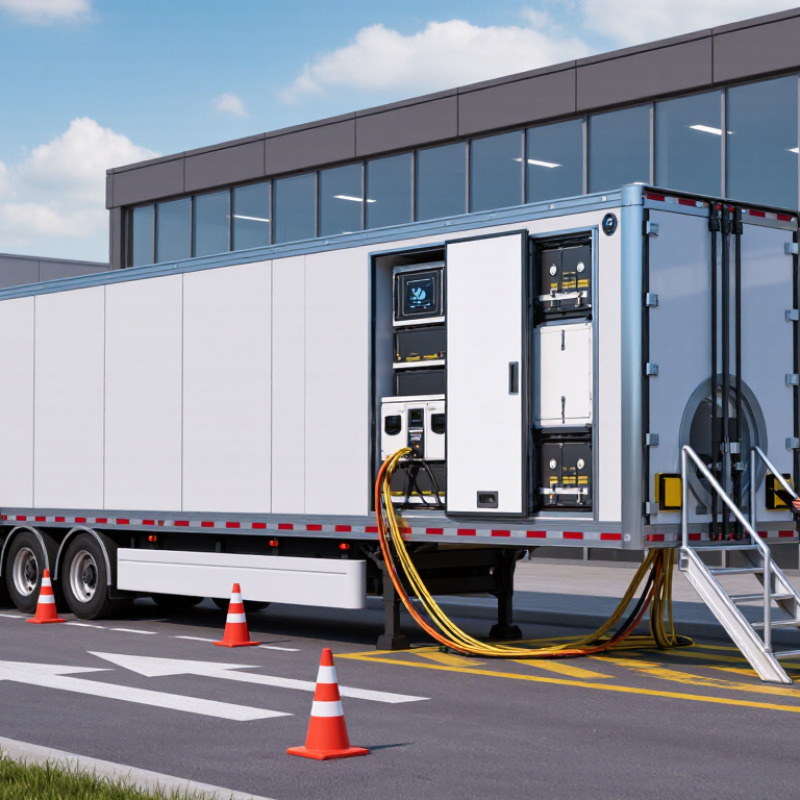
That data supports mobile CT rental for temporary capacity gaps. Hospitals can deploy a scanner near a damaged facility, rural referral route, or expanding diagnostic center. A familiar example is a truck arriving beside a hospital, with shielding, power checks, and trained operators arranged before scanning begins. OECD Health Statistics 2024 shows persistent differences in diagnostic equipment availability among member economies. However, rental is not automatically access. Staffing, maintenance response, patient transport, and referral pathways still matter.
The IAEA’s DIRAC database highlights how imaging resources depend on technical infrastructure and qualified personnel. Buyers should therefore assess uptime records, installation timelines, radiation-safety documentation, and local service coverage. WHO guidance on medical-device planning also supports lifecycle thinking, rather than focusing only on acquisition price. The market data is useful, but incomplete. That limitation deserves attention. A short contract may solve seasonal demand while exposing weak scheduling or power reliability. Careful buyers should compare reported scanner capacity with real patient throughput, because availability on paper can differ sharply from access at the examination room.

For global buyers comparing mobile CT rentals, slice count is a practical starting point, not a magic score.
16-slice A 16-slice system suits routine head, chest, and abdominal examinations. It usually needs less power and offers simpler site planning. However, coverage is slower during busy periods.
32-slice A 32-slice unit adds useful speed for emergency and general imaging. It can balance cost, patient flow, and clinical capability.
64-slice A 64-slice system is often the mobile workhorse. Its broader detector coverage supports faster trauma studies, angiography, and selected cardiac protocols.
128-slice A 128-slice system can reduce acquisition time further. Yet, slice count alone does not guarantee sharper images or lower dose.
Detector width, rotation speed, dose modulation, reconstruction software, and operator training matter equally. Small details matter.
The OECD’s Health at a Glance 2023 reported about 27 CT scanners per million people across OECD countries in 2021, showing how uneven access can remain.
For temporary capacity, buyers should match modality to referral volume, not marketing language. Check electrical load, cooling, shielding, ramp access, PACS connectivity, and local licensing before delivery.
IAEA quality-assurance guidance also stresses image quality, dose monitoring, calibration, and documented staff procedures.
I would not rent a 128-slice unit for every site. Its logistics and operating demands may outweigh its speed. A 32- or 64-slice system may perform better in a constrained mobile environment. Performance must be verified on location.
Global buyers need more than a low daily rate when renting a mobile CT system. A practical shortlist starts with fleet depth, not advertising claims. Ask how many scanner units are ready for dispatch, their slice configurations, and their average operating age. Request maintenance records, acceptance-test reports, and recent uptime data. These documents reveal whether capacity is real.
Uptime should be measured over a defined period, such as the previous twelve months. Separate scheduled maintenance from unexpected downtime. A 98% figure sounds strong, but it means little without exclusions. Ask how quickly engineers acknowledge alerts, arrive onsite, and restore imaging service. Keep a spare-parts list. It should include detectors, power modules, cables, and cooling components. In practice, delays often begin with one missing connector. That detail is easy to overlook.
Service coverage needs geographic evidence. Map technician locations, customs-handling capability, remote-monitoring hours, and escalation contacts near each planned site. Confirm installation, safety coordination, operator training, and removal support in writing. Ask for references from facilities with similar scan volumes and climate conditions. A desert deployment tests cooling differently from a northern mobile unit. Some suppliers provide excellent equipment but thin local support. We should admit this risk. Procurement teams can score fleet availability, uptime, response time, and coverage separately, then verify each score against contracts, logs, and named personnel.
For global buyers, a mobile CT rental should pass a safety review before a price comparison. The IAEA recommends diagnostic reference levels, patient-size adjustment, protocol optimization, and regular quality control. Its publications stress that DRLs are investigation tools, not legal dose limits. Ask for recent CTDIvol and DLP test results. Request phantom images, calibration dates, and service records.
FDA guidance also warns that clearance of a CT system does not prove safe use at every facility. Buyers should verify dose alerts, automatic exposure control, protocol locking, and operator training. The FDA’s 2012 CT radiation-safety initiative encouraged facilities to record and review dose information. Do not accept a generic compliance letter. Check the exact model, software version, detector configuration, and transport setup.
Accreditation adds useful evidence, but it is not magic. Confirm whether the inspection covers the mobile unit, clinical site, physicist testing, and image-quality results. IEC 60601-2-44 requirements may support equipment safety, while ISO 13485 mainly addresses a manufacturer’s quality system. These are different checks. A certificate can look reassuring yet omit local acceptance testing. That gap matters. Procurement teams should document exceptions, because temporary deployments often receive less scrutiny than permanent rooms. A better question is simple: can the supplier prove safe performance today, with this unit, at this location?
Supplier-neutral evaluation matrix for mobile and relocatable CT rental procurement
| No. | Evaluation dimension | What should be verified | Recognized reference or factual basis | Acceptable evidence from the rental supplier | Priority | Buyer result |
|---|---|---|---|---|---|---|
| 1 | IAEA radiation-safety alignment | Confirm that the operating program applies justification, optimization, patient protection, staff monitoring, controlled areas, and quality assurance. | IAEA safety standards emphasize justification and optimization of medical exposures. Patient dose limits are not used as a substitute for clinical justification. | Radiation-protection program, local rules, responsible medical physicist details, staff dosimetry process, and documented QA procedures. | Critical | Pass / Hold |
| 2 | Dose reporting and optimization | Check whether CTDIvol, DLP, scan length, protocol parameters, and patient-size information are captured and reviewable. | CTDIvol and DLP are scanner dose indicators, not complete patient risk estimates. Appropriate comparison is normally made with applicable local or national diagnostic reference levels. | Sample dose reports or DICOM radiation dose structured reports, protocol library, dose-alert configuration, and optimization records. | Critical | Pass / Hold |
| 3 | Local radiation authorization | Determine whether the mobile unit, facility, operator, and radiation-emitting equipment may legally operate in the destination jurisdiction. | Licensing, registration, shielding, inspection, and operator requirements are controlled by the applicable national, state, provincial, or municipal authority. | Current permits, inspection certificates, radiation survey report, shielding calculation, and named local license holder or responsible organization. | Critical | Pass / Hold |
| 4 | FDA market-access check | For United States deployment, verify the exact device configuration and intended use, not only the equipment family name. | FDA medical-device controls may include applicable 510(k) clearance or other marketing authorization, establishment registration, device listing, labeling, and post-market obligations. | FDA database record or authorization reference, device identification, UDI information where applicable, labeling, and written confirmation of configuration equivalence. | Critical for U.S. | Verify |
| 5 | Acceptance testing and commissioning | Confirm that image quality, dose output, safety functions, table movement, interlocks, and emergency systems are tested at the destination site. | Acceptance testing establishes baseline performance before clinical use; test scope and tolerances should follow local rules, manufacturer specifications, and qualified physicist procedures. | Signed acceptance report, phantom results, dose measurements, image-quality baseline, corrective-action log, and release-to-service approval. | Critical | Pass / Hold |
| 6 | Quality-management certification | Separate medical-device manufacturing controls from rental, installation, maintenance, and clinical-service controls. | ISO 13485 applies to medical-device quality-management systems when within the certified organization and scope; certification does not replace regulatory authorization. | Accredited certificate, certificate scope, issuing body, expiry date, covered legal entity, and evidence that rental and service activities are included where relevant. | High | Score |
| 7 | Calibration and metrology traceability | Verify calibration status for dose meters, survey meters, and test instruments used for CT commissioning or periodic QA. | ISO/IEC 17025 concerns competence of testing and calibration laboratories; traceability should lead to recognized national or international measurement standards. | Calibration certificates, instrument serial numbers, due dates, measurement uncertainty, laboratory scope, and traceability statement. | High | Score |
| 8 | Electrical, transport, and site readiness | Assess vehicle dimensions, floor loading, power supply, grounding, HVAC, network connectivity, accessibility, infection control, and emergency egress. | Requirements depend on the scanner configuration, transport platform, building code, electrical code, and destination-site risk assessment. | Site survey, electrical load schedule, structural or floor-load confirmation, shielding plan, connectivity test, delivery plan, and contingency procedure. | High | Score |
| 9 | Service continuity and uptime | Review preventive maintenance, breakdown response, parts availability, remote support, backup arrangements, and escalation procedures. | Service-level commitments are contractual. Any uptime percentage should be defined by measurement period, exclusions, response time, and remedy. | Maintenance history, service-level agreement, response-time table, spare-parts plan, qualified engineer coverage, and business-continuity plan. | High | Score |
| 10 | Data protection and interoperability | Confirm secure image transfer, user access controls, audit logs, backup, retention, export, and integration with the destination PACS or RIS. | DICOM supports medical-image interoperability; privacy and cybersecurity duties depend on the destination country and healthcare organization. | DICOM conformance statement, network-security architecture, encryption details, access matrix, data-processing terms, backup test, and deletion certificate process. | High | Score |
| 11 | Operator competence and clinical governance | Verify operator credentials, modality training, contrast-safety procedures, pregnancy screening, emergency response, and medical-physicist support. | Professional licensing and scope-of-practice requirements are determined by the destination jurisdiction and facility governance system. | Staff credential records, competency assessments, continuing-education records, contrast reaction protocol, emergency drills, and supervision plan. | Critical | Pass / Hold |
Top Mobile CT Rental Companies for Global Buyers
International mobile CT rentals depend on logistics more than the advertised daily rate. A practical lead time is often four to eight weeks, depending on destination, availability, permits, and site readiness. Urgent projects may move faster, but rushed shipping can increase costs and errors. Confirm delivery windows, installation support, electrical requirements, road access, and return arrangements before signing.
Customs planning needs careful documentation. Temporary import procedures may require commercial invoices, serial numbers, packing lists, and proof of return. Rules differ by country and can change without much notice. A local customs broker can prevent delays at the port. Still, broker advice should be checked against official requirements. One overlooked document can leave a large scanner in storage for days.
Insurance should cover transit, loading, installation, operation, and return transport. Ask whether damage, theft, downtime, and third-party claims are included. The total cost may also include duties, taxes, permits, escorts, fuel, accommodation, and engineering work. A low rental quote can become expensive after these charges appear. Build a written cost model with best-case and delay scenarios. It may not be perfect, but it exposes weak assumptions early. Site photos, measured doorways, and a confirmed power supply often save more money than negotiation.