Essential Tips for Choosing the Right Capsule Pressure Gauge?

Choosing the right Capsule Pressure Gauge is crucial in various applications. This instrument measures pressure in a precise and reliable manner. The right selection will enhance efficiency in your operations and ensure safety.

Many factors influence your choice. Consider the pressure range, accuracy, and environment. Understanding these elements can prevent costly mistakes. A Capsule Pressure Gauge must fit your specific needs, whether in industrial, medical, or research settings.

It’s easy to overlook minor details. Different gauges may have unique sensitivity and durability. Users should reflect on their experience and seek expert advice when unsure. Making an informed decision will lead to better outcomes in the long run.
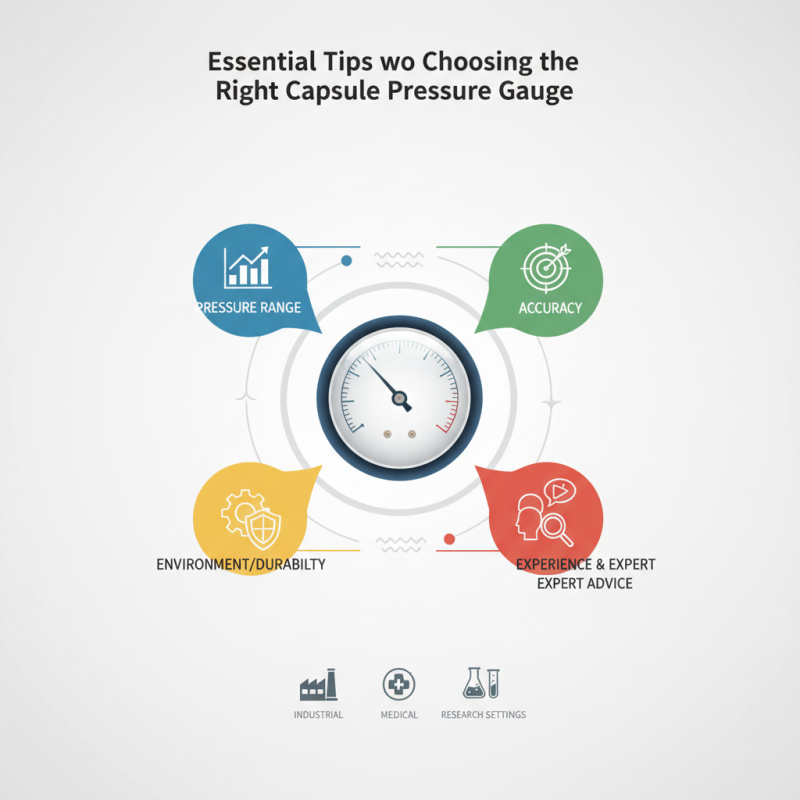
Essential Tips for Choosing the Right Capsule Pressure Gauge?

Understanding Capsule Pressure Gauges: A Brief Overview

Capsule pressure gauges are crucial for measuring low-pressure applications. Their design features a flexible diaphragm. When pressure changes, this diaphragm moves, offering precise readings. This mechanism is vital in various industries, like HVAC and food processing.

Understanding the right specifications is critical. Consider aspects like pressure range, accuracy, and response time. Many users overlook the importance of these details. The gauge's scale must match the application's pressure levels. Mismatched gauges can lead to inaccurate readings, compromising safety and efficiency.

Calibration is another essential aspect. Regular checks ensure the readings remain reliable. Some may neglect this process, assuming gauges are self-sustaining. This can lead to significant errors over time. A well-calibrated gauge is key to maintaining operational integrity and safety standards.

Key Factors to Consider When Choosing a Capsule Pressure Gauge

When selecting a capsule pressure gauge, several key factors should be considered. Accuracy is vital; a precise gauge ensures reliable readings.

Look for models that offer a resolution suitable for your application. If you work in critical environments, even small variances can lead to significant consequences.

The material construction of the gauge also plays a crucial role. Capsules are typically made from metals like brass or stainless steel.
Choose a material that can withstand the pressure and corrosive factors in your environment.
For some applications, a glycol-filled gauge may reduce vibration effects, enhancing reading stability.

Consider the range of the gauge. It should fit the pressure levels you frequently encounter.
A gauge that is over or under-specified can yield misleading results.

Think about the installation process too. Some gauges require specific fittings or orientations.
Ensure it fits seamlessly into your setup.

Evaluate these factors carefully to avoid costly errors.

Different Types of Capsule Pressure Gauges and Their Uses

When selecting a capsule pressure gauge, understanding the various types can greatly enhance your decision-making process. Capsule pressure gauges are primarily used for measuring low pressures accurately. They operate by using a thin flexible capsule that expands and contracts with pressure changes. This design is essential for applications in industries like HVAC, food and beverage, and pharmaceuticals.


There are several types of capsule pressure gauges available. Some are designed specifically for high-humidity environments. Others may cater to corrosive media. Knowing the intended application helps in choosing the correct gauge. For instance, a rugged design is ideal for outdoor use. However, it's important to note that not all gauges will perform adequately under extreme conditions.


Calibration and maintenance play a significant role in the reliability of these gauges. Regular checks can prevent inaccurate readings. Nonetheless, manufacturing inconsistencies may cause performance issues, so always verify the gauge's specifications. Reflecting on these factors can lead to a more informed choice, enhancing operational safety and effectiveness.

How Accuracy and Range Affect Your Choice of Pressure Gauge

Selecting the right capsule pressure gauge is not merely about functionality; it's about precision and adaptability to specific needs. Accuracy plays a crucial role in ensuring reliable measurements. According to industry professionals, gauges should have an accuracy rating of at least ±1% of full scale. This ensures that your readings reflect the actual pressure with minimal error, especially in high-stakes environments like laboratories or manufacturing plants.

Range is another pivotal factor. A gauge with an appropriate pressure range prevents the risk of over- or under-reading. Inaccurate data can lead to unsafe conditions. Data from engineering reports suggest that a range exceeding the normal operating pressure by 25% is ideal to maintain both accuracy and longevity. It is essential to match the gauge's range with your operational parameters.

Tips for choosing the right gauge include understanding the environment where it will be used. Corrosive or high-temperature environments may necessitate specific materials or designs. Consider routine calibration as well; even the best gauges can drift over time. Additionally, assess the readability of the display. A cluttered or small reading can lead to misinterpretation.

Essential Tips for Choosing the Right Capsule Pressure Gauge - How Accuracy and Range Affect Your Choice of Pressure Gauge

Gauge Type Accuracy (%) Pressure Range (psi) Suitable Applications Calibration Frequency
Standard Capsule ±1.5% 0-100 General Industrial Use Every 12 months
High Accuracy Capsule ±0.5% 0-50 Laboratory Testing Every 6 months
Vacuum Capsule ±2.0% -30 to 0 Food Processing Every 12 months
Digital Capsule ±0.3% 0-150 Precision Engineering Every 12 months
Heavy-Duty Capsule ±1.0% 0-300 Oil and Gas Industry Every 18 months

Maintenance Tips for Long-lasting Capsule Pressure Gauges

When it comes to maintaining capsule pressure gauges, regular care is essential for longevity. Keep the gauge clean and dry. Dust and moisture can interfere with readings. Use a soft cloth for cleaning. This simple step can prevent inaccurate measurements over time.

Another important maintenance tip is to check the calibration regularly. Over time, even the best gauges can drift from their original settings. Regular checks help to ensure that your readings remain reliable. A small investment in calibration tools can save you money later on.

Make it a habit to inspect the gauge for leaks or damages. Small cracks or leaks are often overlooked. They can lead to serious issues. Addressing these problems early can keep your gauge functioning effectively for years. Remember, the quality of your measurements relies heavily on the condition of your equipment. Guarding against neglect will yield reliable performance.