2025 How to Choose the Right CT Scan Machine for Your Medical Facility

In the ever-evolving realm of medical technology, the selection of the right CT scan machine is crucial for any healthcare facility aiming to provide accurate diagnostics and effective patient care. As Dr. Emily Nguyen, a leading radiologist and industry expert, points out, "A state-of-the-art CT scan machine not only enhances diagnostic capabilities but also significantly improves patient outcomes." This statement underscores the importance of choosing the most appropriate equipment that aligns with a facility’s specific needs and the volume of patients it serves.

When considering the purchase of a CT scan machine, medical administrators and technicians must evaluate various factors, including image quality, speed, cost-effectiveness, and the machine’s compatibility with existing systems. Additionally, understanding the latest technological advancements—such as advanced image reconstruction algorithms and dose reduction techniques—can assist medical facilities in making informed choices.

The decision-making process is pivotal, as the right CT scan machine can facilitate early detection of diseases, streamline workflow, and ultimately enhance patient satisfaction. By carefully assessing their options and staying informed about current industry standards, healthcare providers can select a CT scan machine that supports their commitment to delivering high-quality medical care.
2025 How to Choose the Right CT Scan Machine for Your Medical Facility

Factors to Consider When Choosing a CT Scan Machine

2025 How to Choose the Right CT Scan Machine for Your Medical Facility

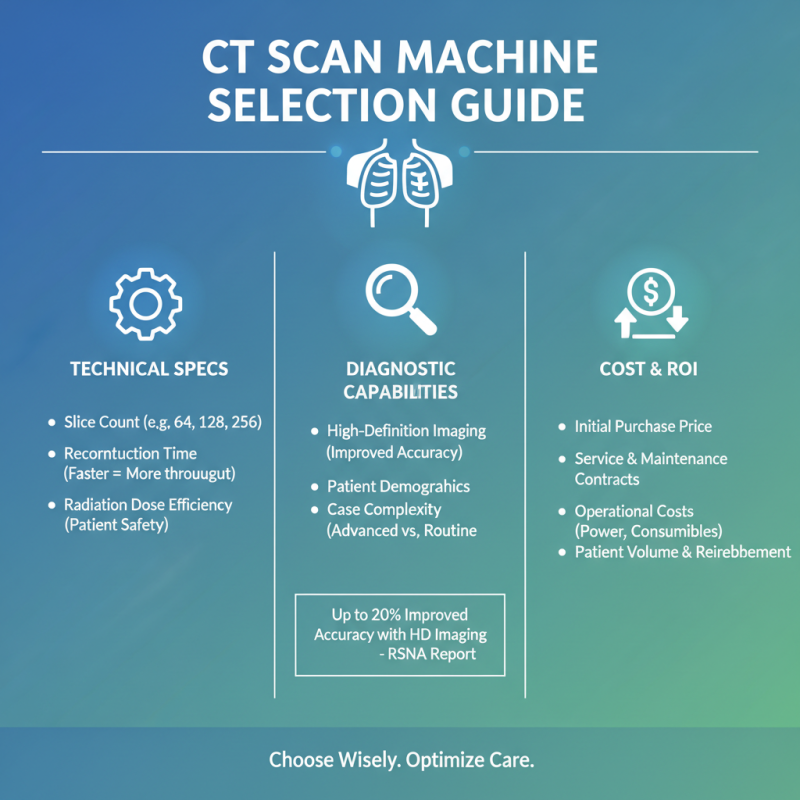
When selecting a CT scan machine for your medical facility, several crucial factors must be considered to ensure optimal performance and efficiency. First, assess the technical specifications required for your facility’s patient demographic and diagnostic needs. Modern CT machines vary significantly in terms of slice count, reconstruction times, and radiation dose efficiency. According to a report by the Radiological Society of North America, advances in technology have shown that high-definition imaging capabilities can improve diagnostic accuracy by up to 20%, making it vital to choose a machine that aligns with the complexity of cases your facility handles.

Another key factor is the machine’s compatibility with existing systems and future advancements. Facilities should evaluate their current infrastructure and consider how a new CT scanner will integrate with other diagnostic imaging machines and electronic health records. Data from a recent industry analysis indicated that hospitals with interoperable systems experience a 30% reduction in workflow inefficiencies. Additionally, consider the machine's ease of use and maintenance requirements; machines that offer user-friendly interfaces and require minimal downtime can significantly enhance operational productivity. Thus, careful consideration of these factors will help ensure that your investment in a CT scan machine meets both current demands and prepares your facility for future growth in medical imaging technology.
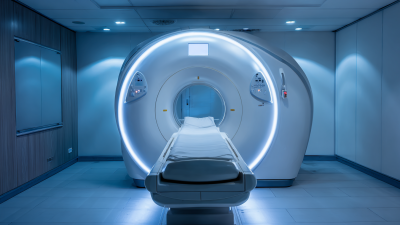
Types of CT Scanners Available for Medical Facilities

When selecting the right CT scanner for a medical facility, it's crucial to understand the various types of CT scanners available in the market. The primary categories of CT scanners include conventional or standard CT scanners, helical (or spiral) CT scanners, and computed tomography angiography (CTA) scanners. According to a 2022 market report by Global Industry Analysts, the global CT scanner market is projected to reach $7.1 billion by 2025, reflecting a growing demand for advanced imaging technologies across healthcare settings.

Conventional CT scanners provide basic imaging capabilities suitable for standard diagnostic purposes. Conversely, helical CT scanners utilize continuous rotation of the X-ray source to acquire data, which significantly enhances speed and image quality. This type of scanner is particularly beneficial in emergency settings where rapid diagnosis is essential. Moreover, CTA scanners are specialized for vascular imaging, allowing healthcare providers to assess blood vessels and detect conditions like aneurysms or blockages, as highlighted in a recent study from the Journal of Radiology stating that CTA has a high sensitivity and specificity for vascular diseases.

Considering these options, facilities must evaluate their specific needs, including the types of diagnoses they plan to perform and the expected patient throughput. Data from the American College of Radiology indicates that the choice of CT scanner can significantly impact not only diagnostic accuracy but also patient safety and operational efficiency. By understanding the distinct features and capabilities of each type of CT scanner, healthcare facilities can make informed decisions that align with their clinical goals and patient care objectives.

Evaluating Image Quality and Resolution in CT Scans

When selecting the right CT scan machine for your medical facility, evaluating image quality and resolution is paramount. High-quality images are crucial for accurate diagnoses; thus, understanding factors that impact image clarity is essential. Key aspects include the slice thickness, which affects the level of detail captured, and the type of detector used, which can influence the system's sensitivity and dynamic range. A machine capable of generating thin slices will provide more precise images, making differentiation between structures easier for radiologists.

Additionally, consideration should be given to the noise level and contrast resolution of the CT scanner. Lower noise levels typically lead to clearer images, allowing for better visibility of anatomical details. Contrast resolution, the ability of the CT scanner to differentiate between slight differences in tissue density, is also vital. Facilities should prioritize machines that offer advanced reconstruction algorithms, as these can enhance image quality without significantly increasing radiation exposure. Ultimately, investing in a CT scan machine that prioritizes high image quality and resolution will lead to better patient outcomes and improved diagnostic capabilities.

Evaluating Image Quality and Resolution in CT Scans

Understanding Cost and Budget Constraints for CT Machines

When selecting the right CT scan machine for your medical facility, understanding cost and budget constraints is crucial. According to a recent report by the American College of Radiology, the average cost of a new CT scanner ranges from $150,000 to over $2 million, depending on the model and capabilities. Additionally, maintenance costs can add another 10-15% to the yearly budget. Facilities need to consider both the initial acquisition cost and the long-term operational expenses, which can include service contracts, consumables, and upgrades.

Tips: Assess the specific needs of your facility by considering factors such as patient volume, required image quality, and intended use. Budgeting for unexpected repairs or upgrades is also essential to avoid financial strain. Establishing a clear vision of your expected return on investment can guide your decision-making process.

Moreover, understanding the various financing options available is key. Many medical facilities utilize leasing options to spread costs over time, which can ease cash flow constraints. A study by Frost & Sullivan emphasizes the growing trend of shared ownership models, allowing multiple smaller facilities to invest in advanced CT technology without bearing the full burden alone. Prioritizing strategic financial planning can help ensure that you select a CT scanner that meets both clinical and budgetary needs.

Maintenance and Support Considerations for CT Scan Equipment

When selecting a CT scan machine for your medical facility, maintenance and support considerations are paramount. A well-maintained CT scanner not only enhances the performance and longevity of the equipment but also ensures the safety and comfort of patients. It is crucial to review the manufacturer’s recommended service schedule and determine how readily available maintenance technicians are for on-site repairs and routine check-ups. Facilities should look for options that provide training for their personnel, enabling them to perform basic maintenance tasks and recognize early signs of potential issues.

In addition to routine maintenance, ongoing technical support is essential for minimizing downtime and ensuring that the equipment operates at optimal levels. Evaluate the terms of the warranty and the availability of customer service. Many facilities benefit from comprehensive support packages that include 24/7 technical assistance, remote diagnostics, and regular software updates. This proactive approach helps in avoiding unexpected costs and disruptions in service, promoting a seamless workflow in patient care and ensuring that the CT equipment remains a reliable asset for diagnosing medical conditions.

2025 How to Choose the Right CT Scan Machine for Your Medical Facility - Maintenance and Support Considerations for CT Scan Equipment

Dimension Considerations Importance Level
Image Quality Resolution and contrast for accurate diagnosis. High
Patient Safety Minimizing radiation exposure. Critical
Ease of Use User interface and training requirements. Moderate
Maintenance Support Availability of service and parts. High
Cost of Ownership Initial purchase price and ongoing expenses. High
Technology Upgrades Availability of software updates and enhancements. Moderate
Warranty and Service Agreements Length and terms of the warranty offered. High