How to Choose a CT Scan Mobile Unit in 2026?
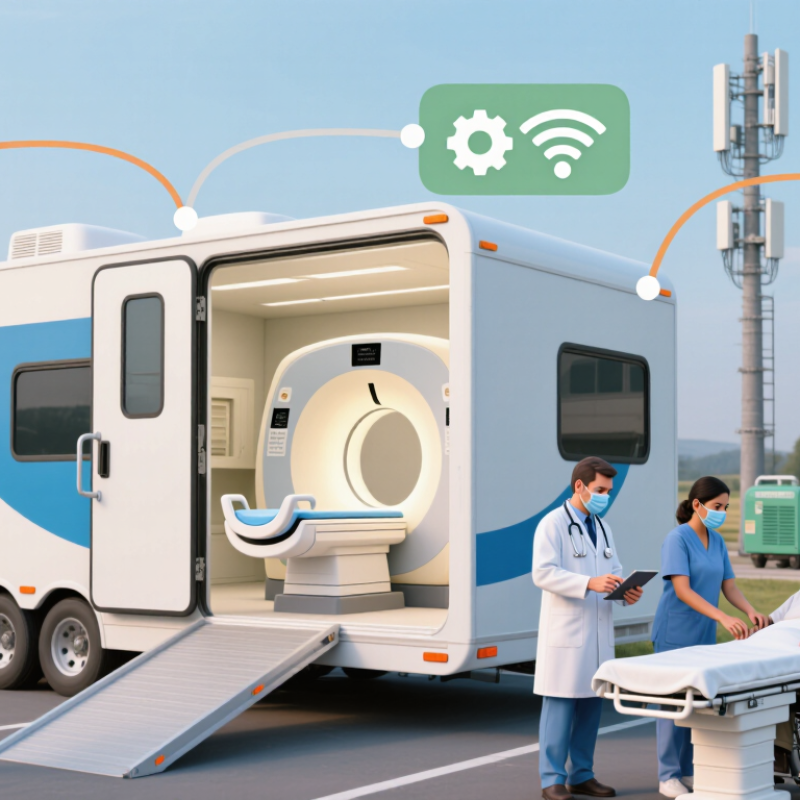
Choosing a Ct Scan Mobile Unit in 2026 requires more than comparing scanner brands or daily rental prices. The right unit must fit clinical needs, site conditions, patient volume, and operational risks. A mobile scanner may arrive beside a rural clinic, hospital extension, or emergency department. Its success depends on what happens inside and outside the vehicle.
Radiologist and medical-imaging informatics expert Dr. Eliot Siegel offers a useful principle: “The best imaging service is the one that reaches the patient safely, efficiently, and accurately.” This idea should guide every purchasing decision. Ask about detector technology, slice capability, radiation-dose controls, image reconstruction, and compatibility with existing PACS and electronic records. Inspect the patient table, wheelchair access, climate control, and internal space. Small details matter.
Power requirements can disrupt a busy hospital. Uneven parking surfaces can affect setup. Weak network connections can delay reports. A strong provider should explain preventive maintenance, emergency repairs, technologist credentials, and backup arrangements in clear language. Request uptime records, accreditation evidence, insurance documentation, and references from similar facilities.
Do not trust impressive brochures alone. See the unit.
A lower quote may hide transport fees, scanning limitations, or delayed service visits. However, no checklist is perfect. Local workflow, staffing shortages, and unexpected weather can still change results. The most reliable choice balances image quality, patient safety, scheduling flexibility, compliance, and total operating cost. The following outline examines these factors closely, helping decision-makers choose a Ct Scan Mobile Unit that performs consistently in real clinical conditions.
Define Clinical Demand: Match Slice Count, Scan Volume, and Exam Mix
How to Choose a CT Scan Mobile Unit in 2026?
Define Clinical Demand: Match Slice Count, Scan Volume, and Exam Mix
Start with patient demand, not an impressive specification sheet. OECD Health Statistics 2024 shows that CT examination rates vary widely among reporting countries. Local demand can differ just as sharply between a regional hospital and a trauma center. Review the previous twelve months of referrals. Separate routine head, chest, abdomen, angiography, cardiac, and emergency examinations. Count weekly peaks, not only annual totals. A unit handling 20 studies daily may struggle during Monday trauma surges.
Slice count should support the exam mix. High-resolution vascular or cardiac studies may require faster acquisition and advanced reconstruction. Routine head and chest work may not justify the highest configuration. The IAEA’s 2023 guidance on diagnostic reference levels stresses protocol-specific optimization, patient size, and examination type. Ask for documented dose data, image-quality testing, and protocol examples. Do not accept vague claims.
Check workflow details. Can the unit complete contrast studies safely during cold weather? Is there enough room for patient transfer, monitoring, and emergency access? Review uptime records, average setup time, and technologist coverage. The American College of Radiology’s Dose Index Registry demonstrates the value of comparing local protocols with broader benchmarks. Still, benchmarks are not guarantees. A tidy spreadsheet can mislead. I would also model missed appointments, repeat scans, and seasonal demand. Those numbers are easy to overlook. They matter.
Check Image Quality: Use CTDIvol and DLP Under IEC 60601-2-44
How to Choose a CT Scan Mobile Unit in 2026?
When evaluating a mobile CT unit, image quality cannot rely on pictures alone. Check CTDIvol and DLP values during acceptance testing. These indicators help assess radiation output under IEC 60601-2-44 requirements. CTDIvol reflects scanner output for a selected protocol. DLP combines dose with scan length. Both must be compared with the protocol, body region, and patient size.
Ask the supplier for dose reports, phantom test results, and representative clinical images. Review low-contrast visibility, spatial detail, uniformity, and artifact control. A lower CTDIvol does not automatically mean better performance. Excessive noise may hide small lesions. I once treated a low DLP as proof of efficiency. That was too simplistic. Mobile imaging also faces vibration, uneven flooring, limited space, and changing power conditions.
Tips:
Compare identical protocols, not isolated numbers. Request pediatric and adult data when relevant. Check whether CTDIvol and DLP appear clearly in the dose report. Confirm the scanner records patient-size information and supports consistent protocol adjustments. Ask an experienced radiographer to review images from realistic mobile conditions. Small differences matter. A unit may perform well in a showroom but less consistently beside a busy ward. Review the data twice.
Validate Safety: Apply AAPM Shielding, NEMA XR-29, and IEC Standards
How to Choose a CT Scan Mobile Unit in 2026?
Safety validation should begin before the mobile CT unit arrives. Ask for a site-specific shielding assessment from a qualified medical physicist. AAPM shielding guidance can help estimate barriers, workload, occupancy, and distance. Do not rely on a generic shielding chart. Patient volume may change quickly.
Check whether the system supports NEMA XR-29 requirements for dose notifications, dose alerts, structured dose reports, and access controls. These functions should be tested during acceptance testing, not merely shown in a brochure. Review CTDIvol and DLP records after sample scans. Small workflow gaps can become repeated dose errors. They sometimes do.
Tips: Request the latest compliance documents. Confirm IEC 60601-1 and CT-specific IEC requirements. Ask who performs electrical safety, image-quality, and radiation surveys. Keep signed test records onsite. Verify warning lights, emergency stops, grounding, and cable protection around the vehicle. A rushed inspection is a weak inspection.
Experienced operators should also examine the unit’s physical setup. Check room dimensions, door clearances, leveling, climate control, and power stability. Ask how shielding changes will be handled if the trailer moves. The answer should include documented reassessment. Standards evolve, and certificates can become outdated. This is easy to overlook.
Compare Total Cost: Weigh Throughput, Uptime SLAs, and 2026 Service Coverage
Choosing a CT scan mobile unit in 2026 requires more than comparing purchase or rental prices. Total cost depends on daily throughput, uptime, staffing, transport, and service response. A cheaper unit may become expensive when one missed scanning day delays dozens of patients.
Estimate realistic throughput from your appointment schedule, not the supplier’s best-case figure. Include setup time, patient movement, cleaning, and image transfer. A unit scanning 30 patients daily can lose significant revenue after a six-hour outage. Calculate the cost of each unavailable hour.
My first estimate was wrong. It ignored travel delays.
Review the uptime SLA carefully. Check the guaranteed percentage, response time, repair target, and exclusions for relocation or operator error. Ask whether replacement equipment is available during extended repairs. Service coverage in 2026 should include certified technicians, regional parts access, remote diagnostics, and support during weekends and public holidays. Confirm coverage across every site where the unit may operate, including rural locations. A fast response promise means little if parts require international shipping.
Compare three cost scenarios: normal operation, reduced throughput, and major downtime. Add fuel, insurance, licensing, staffing, site preparation, and cybersecurity support. Request maintenance records from comparable deployments, not only performance brochures. Some assumptions will remain uncertain, especially demand forecasts. Document them and test the budget again before signing.