Choosing Lead Glasses is not a style decision alone. In fluoroscopy and other medical imaging settings, scattered X-rays can expose the eye lens over repeated procedures. The International Commission on Radiological Protection’s Publication 118 (2012) recommends an occupational lens-dose limit of 20 mSv per year, averaged over five years, with no single year above 50 mSv. This is an international recommendation, not a universal local rule. It signals why eye protection deserves careful attention.
Effective eyewear depends on more than the stated lead equivalence. Lens coverage, side shields, frame fit, and the wearer’s position relative to the X-ray source all affect protection. A frame can look robust and still leave a gap near the temple. Small details matter. Published radiation-protection guidance, including NCRP Report No. 168, emphasizes using protective measures within a broader program of dose monitoring and safe work practices. Glasses do not replace shielding, distance, or appropriate positioning.
When comparing lead glasses, check the manufacturer’s test documentation, lead equivalence, lens coverage, weight, and compatibility with prescription lenses. Ask how the design performs during your actual procedures, not just in a product photograph. Fit matters. One limitation is easy to overlook: published attenuation figures may not reflect every face shape or working angle. That makes selection less tidy than a simple number suggests. A qualified radiation-safety professional can help assess the eyewear alongside local requirements and measured exposure data.
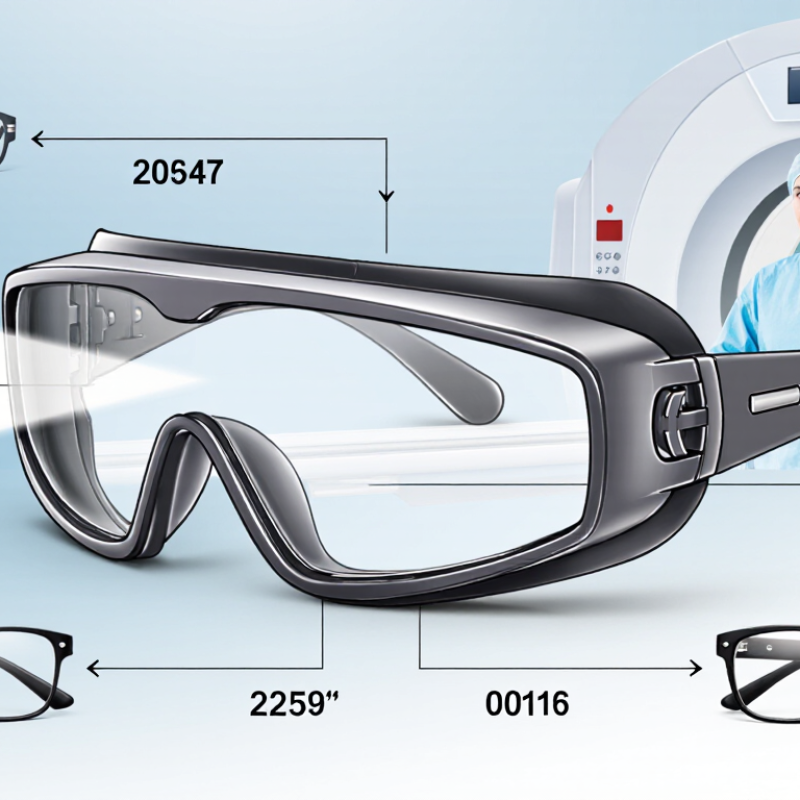
When choosing lead glasses, start with the radiation task, not appearance. Eye exposure varies with imaging method, beam direction, workload, and room layout. Glasses useful during one procedure may offer less protection when scatter reaches the eyes from the side. Ask a radiation safety professional to assess typical exposures and the protection level required. Check the stated lead equivalence and test information for the relevant X-ray energy range. A dark tint is not proof of radiation protection. Fit matters.
Coverage should include the sides without blocking your view of monitors or instruments. Try the glasses while looking down and turning your head; gaps can appear near the temples. Lens clarity, prescription compatibility, weight, and nose-pad comfort matter because uncomfortable glasses may be worn inconsistently. The frame should sit securely without slipping. Leaded eyewear reduces exposure to the eyes, but it does not replace distance, shielding, or safe work practices. Requirements differ by setting, so check your facility’s safety guidance. Small details count.
Tips: Compare documented protection, fit, and optical quality. Inspect lenses and frames regularly for cracks, loose parts, or clouding, and follow the care instructions. Keep a simple inspection record. It is tempting to prioritize lightness alone, but that is not enough. Ask for a professional review if your work pattern changes.

Lead glasses may show a lead-equivalence value, an attenuation percentage, or both. Lead equivalence describes how much lead shielding the lens matches under specified test conditions, often stated in millimetres of lead at a particular X-ray energy or tube voltage. It is not a universal measure. A rating tested at one energy may not predict performance equally well across every imaging procedure.
Attenuation ratings express how much radiation is reduced in a defined test setup. Read the test conditions carefully: beam quality, measurement method, and whether the figure applies to the lens alone can all affect the result. A high percentage can sound decisive. It may still be difficult to compare with another product’s lead-equivalence figure if their tests differ. The numbers are related, but they are not interchangeable.
For a practical comparison, look for documented test results, the stated standard, and coverage details such as side shields. In a fluoroscopy room, for example, a lens rating matters less if radiation can enter around a poor fit. Try the glasses with your usual mask and check for gaps while looking down and turning your head. Comfort matters too; heavy frames often get worn less consistently. That trade-off is easy to overlook. Ask a qualified radiation-safety professional to interpret ratings for your workplace and typical procedures, since protective eyewear supplements—not replaces—other shielding practices.
For radiation-protective eyewear, compare lead glass with lead acrylic by more than weight. Lead glass often offers a crisp view and better scratch resistance, but it can feel heavy during long procedures. Lead acrylic is lighter, though its surface may scratch more easily. Check the stated lead-equivalence rating and test conditions; protection varies with X-ray energy. IEC 61331-3:2014 covers testing requirements for protective eyewear. A rating alone does not tell you how much of the eye is covered.
Shape matters. Wraparound lenses and side shields can reduce exposure entering from the sides, especially when the wearer turns away from the beam. NCRP Report No. 168 describes eye-dose reductions of roughly five- to tenfold with protective eyewear, depending on fit and use. Fit matters. Frames should sit close without pressing on the nose or slipping when you look down. Prescription wearers may need prescription lead lenses or a compatible insert. I would not choose by weight alone; that shortcut can overlook gaps near the temples. Try the glasses with your usual mask and head position, then check whether the frame blocks your working view. Small fit details are easy to miss.
Lead glasses protect only the areas they cover, so fit deserves close attention. The frame should sit securely on the nose without pinching, slipping, or leaving large gaps around the eyes. Try them while looking forward, down, and to each side. Small gaps matter. A frame that shifts when you turn your head may expose more of the orbital area than expected.
Coverage depends on the frame shape and your working position. Side protection can be useful when radiation may reach the eyes from an angle, but no eyewear covers every direction. Check that the lenses sit close enough to the face without touching your cheeks or eyelashes. If you wear prescription glasses, test the lead glasses over them; pressure at the temples can become uncomfortable during a long procedure. Fit is personal. A mirror check helps, but it cannot confirm radiation protection.
Compatibility matters at the workstation. Wear the glasses with your usual mask, face shield, magnifying loupes, or microscope eyepieces, and check for pressure points and blocked views. Tilt your head as you would during a procedure. If the frame catches on equipment or shifts when you look through an eyepiece, seek a better-fitting option. Confirm the required protective level and fit with your facility’s radiation safety professional. I would not treat comfort alone as proof of adequate protection; that distinction is easy to overlook. Keep lenses clean and inspect frames regularly for loose hinges, cracks, or damage.
Inspect lead glasses before each use. Hold them under bright, angled light and look for cracks, chips, cloudy patches, or deep scratches across the viewing area. Check hinges, nose pads, and side shields; a loose frame can leave gaps near the eyes. Small defects are easy to miss. Wipe lenses with a soft cloth and a cleaner approved for the eyewear. Abrasive tissues can make scratches worse.
Keep a record of the eyewear’s lead-equivalence rating, inspection dates, and any repairs. IEC 61331-3:2014 sets requirements and test methods for protective eyewear, including performance evaluation. Follow your facility’s quality-assurance schedule for further assessment; do not rely on appearance alone when damage is suspected. Remove questionable glasses from use and ask radiation-safety staff to evaluate them. A quick visual check is useful, but it cannot confirm shielding integrity.
Maintenance matters because eyewear supplements, rather than replaces, radiation-safety practices. The IAEA’s General Safety Requirements Part 3 sets an occupational effective-dose limit of 20 mSv per year averaged over five consecutive years, with no single year exceeding 50 mSv. This is a dose limit, not a target or a measure of eyewear performance. If glasses repeatedly fog, slip, or cause pressure marks, record the issue and reassess fit; protection that stays in a case is not much protection.
Suggested schedule for planning: visually inspect glasses before each use, perform a more detailed condition check monthly, and document a thorough review annually. These intervals are general guidance, not a universal requirement; follow facility procedures, applicable regulations, and the manufacturer's instructions. Remove damaged glasses from service and have their protective performance assessed according to your radiation-safety program.