Choosing the right Tube Bending Machine is not simply a matter of comparing price tags. Global buyers must match machine capacity to tube material, diameter, wall thickness, bend radius, and daily production volume. A stainless-steel handrail shop has different needs from an automotive supplier running repeated bends across multiple shifts. Small details matter: the space around the machine, tooling changeover time, control clarity, and access to service support can shape the real cost of ownership.
Tube-forming specialist Alex Morgan sums up a useful buying principle: “Judge a bending machine by the consistency of its finished parts, not its specification sheet alone.” That is a practical lens, though it should not replace machine trials or verified technical data. Ask suppliers how they measure repeatability, what tooling is included, and whether sample parts can be checked against your drawings. Watch for springback, surface marks, and fit at the bend—not just a machine’s advertised speed.
This guide compares seven options for buyers with different budgets and production goals. It considers bending capacity, control systems, setup needs, automation, support, and likely shop-floor fit. No single model suits every operation. A fast machine may be excessive for a small workshop; a lower-cost unit may require more operator attention than expected. The trade-offs deserve a close look. Because supplier specifications and regional service coverage can change, confirm current details before purchasing.
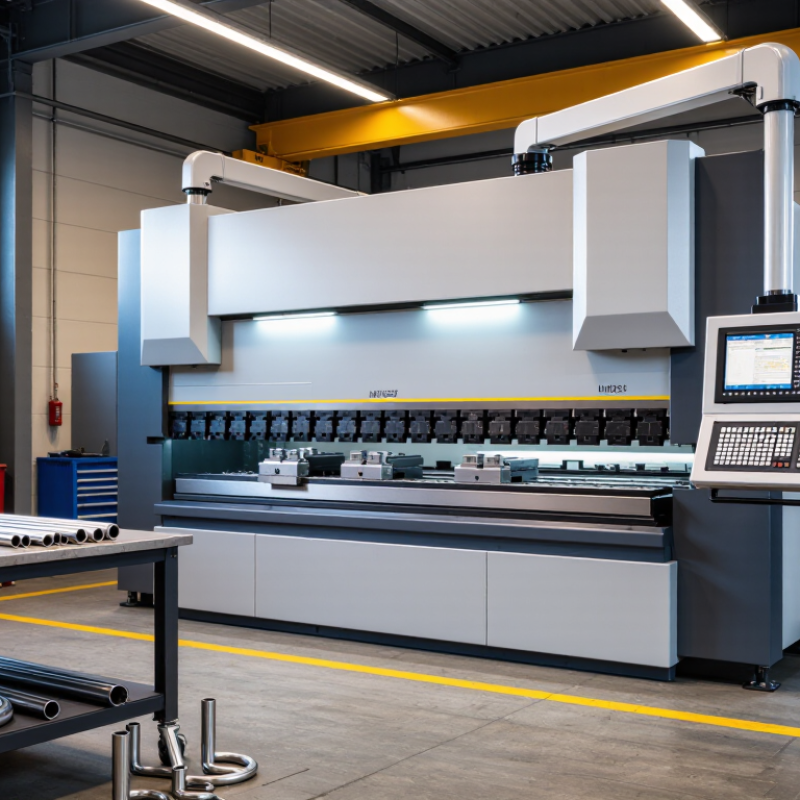
Tube bending machines differ mainly in how they form a curve and control the tube. Manual machines suit simple, low-volume work. Rotary-draw machines clamp the tube and pull it around a fixed-radius die, producing repeatable bends for frames and handrails. A mandrel inside the tube helps prevent wrinkles and flattening, especially on thin-wall material. Roll benders use several adjustable rollers to create large, gradual arcs. Compression benders press the tube against a form; they are straightforward but offer less control over distortion.
CNC describes the control system, not a separate bending method. It stores bend angles, feed lengths, and rotation settings, helping operators repeat complex parts. Setup still matters. Die clearance, material springback, and tube diameter can all change the finished angle. In practice, a few trial bends may still be needed. The International Federation of Robotics reported 4,281,585 industrial robots operating worldwide in 2023, up 10% year over year in World Robotics 2024. That figure signals wider factory automation, but it does not mean every shop needs a fully automated bender.
Tips: Match the machine to your tightest bend radius, tube wall thickness, and production volume. Check sample parts for ovality and wrinkles, not just angle accuracy. Keep a simple setup log; operators sometimes overlook springback changes between material batches.

When comparing tube bending machines, start with the tube sizes and materials you actually run. Check the maximum diameter, wall thickness, and material range against real production samples, not only a specification sheet. Capacity matters.
Next, compare bend radius, angle accuracy, and repeatability. A machine that holds angles across a full shift can reduce rework on frames and handrails. Ask how the control system stores programs and handles corrections. Test a tight-radius bend on your own material, since springback can change the result.
Tooling deserves close attention. Confirm which dies and mandrels are included, how quickly they can be changed, and whether future tooling is easy to source. Review setup time, operator training, guarding, and maintenance access. These details affect daily output more than a headline speed. It matters. Also compare power requirements, footprint, and service support in your region. A fast machine may look ideal on paper, but frequent setup changes can erase its advantage. I would still verify claims with sample parts and a realistic production trial; brochures rarely show every awkward adjustment.
Global buyers need tube bending machines that match their materials, production volume, and workshop conditions. These seven machine types offer different strengths: manual benders suit occasional, simple bends; rotary draw machines produce repeatable angles; and roll benders form broad, gradual curves. A manual unit may work well for prototypes, but it can slow a busy production line.
Compression benders are often used for straightforward bends with limited setup. Mandrel benders support tighter bends in thin-wall tubing by helping reduce wrinkling and flattening. CNC tube benders automate programmed sequences, which can improve consistency across repeated parts. Induction benders heat a selected area before forming, making them useful for larger or heavier tubes. Each process has limits. Test the actual tube material and dimensions before choosing.
Check the usable tube diameter, wall thickness, bend radius, tooling range, and available floor space. Ask suppliers for sample bends made with comparable material, then inspect the finished parts for ovality, surface marks, and dimensional variation. Confirm service access, operator training, spare-part availability, and electrical compatibility at the installation site. These details matter over years of use. Still, no shortlist is perfect. A machine with impressive specifications may not fit a particular workflow, so compare real production needs rather than brochure claims.
Choosing among the seven best tube bending machines starts with the tube, not the machine’s advertised maximum capacity. Check the material, outside diameter, wall thickness, and bend radius. Thin-wall stainless steel may wrinkle without internal support, while thicker steel can demand more force and a stronger frame. Copper and aluminum are easier to form, but they can still flatten if tooling does not fit. Small workshops may prefer a manual or electric bender for occasional jobs. High-volume production often calls for hydraulic or CNC control, especially when bends must repeat accurately. A machine that handles every size sounds convenient. It may also be a costly mismatch.
Tips: Ask for a test bend using your actual tube and target radius. Inspect the finished bend for flattening, wrinkles, and springback. Confirm the tooling range before ordering. Small details matter.
For tight radii, a mandrel bender can help support the tube during forming. Rotary draw machines suit repeatable bends, while roll benders are useful for broad curves. Match the control system to your workload: CNC setup can reduce variation across batches, but it takes time to program and maintain. I have seen buyers focus on maximum bending force and overlook setup time. That is an easy mistake. Compare cycle time, changeover effort, operator training, and service access alongside capacity. Leave room for future jobs, but do not pay for features your production rarely uses.
Indicative capacity examples for common machine configurations. Actual limits vary with material, wall thickness, bend radius, tooling, and machine design.
Use OD as an initial screening measure—not a guarantee of bend capability. Confirm the machine’s rated capacity for your material, tube dimensions, and required production rate.
Global purchasing starts with a clear specification, not a low headline price. Send suppliers the tube material, outside diameter, wall thickness, bend radius, and expected production volume. Include a sample drawing with tolerances. Ask whether the quoted tooling covers your profiles, and request a written list of exclusions. Small omissions can delay approval.
Shipping deserves the same scrutiny as machine performance. Confirm packed dimensions, gross weight, loading method, and delivery terms before comparing quotes. A machine may need a reinforced crate, moisture barriers, and clearly marked lifting points. Check who prepares export documents and arranges cargo insurance. Ask about installation needs, including floor capacity, power supply, and compressed-air quality. Port delays happen. Leave room in the schedule.
After-sales support should be measurable. Request service hours, available languages, remote diagnostic options, and wear-part availability. Ask how operators receive training, and whether manuals include maintenance intervals and fault codes. A video call may resolve a setup question; a damaged component could take weeks to replace. That difference matters. Record agreed response times and spare-part lead times. Even careful planning misses something, so confirm critical details again before payment and shipment. That extra check is not elegant, but it may prevent a costly surprise.