Which Block Calibrator Is Best in 2026?
Choosing the best Block Calibrator in 2026 depends on the temperatures you test, the probes you use, and the uncertainty your work can tolerate. A compact unit may suit routine checks near a workbench. A wider-range model may be necessary for varied processes. Neither is automatically better.
Look beyond the advertised temperature range. Check stability, uniformity, well depth, heating and cooling time, and compatibility with your probe diameter. Picture a sensor sitting loosely in a shallow well: the display may look steady, yet the reading may not represent the sensor accurately. Good technique matters. So does a suitable insert.
A named expert quotation can add useful context, but no source material or verifiable quotation was provided for this request. I will not invent one or attribute a made-up statement to a real specialist. That is a limitation worth stating plainly. This comparison instead focuses on checkable specifications, calibration documentation, service support, and practical operating needs. It also considers the less convenient details, such as warm-up time and the effort required to change inserts. No single Block Calibrator fits every laboratory. The best choice is the one that meets your measurement needs with documented performance—and leaves room to question whether the advertised accuracy matches your actual setup.
What a Block Calibrator Is and How It Works
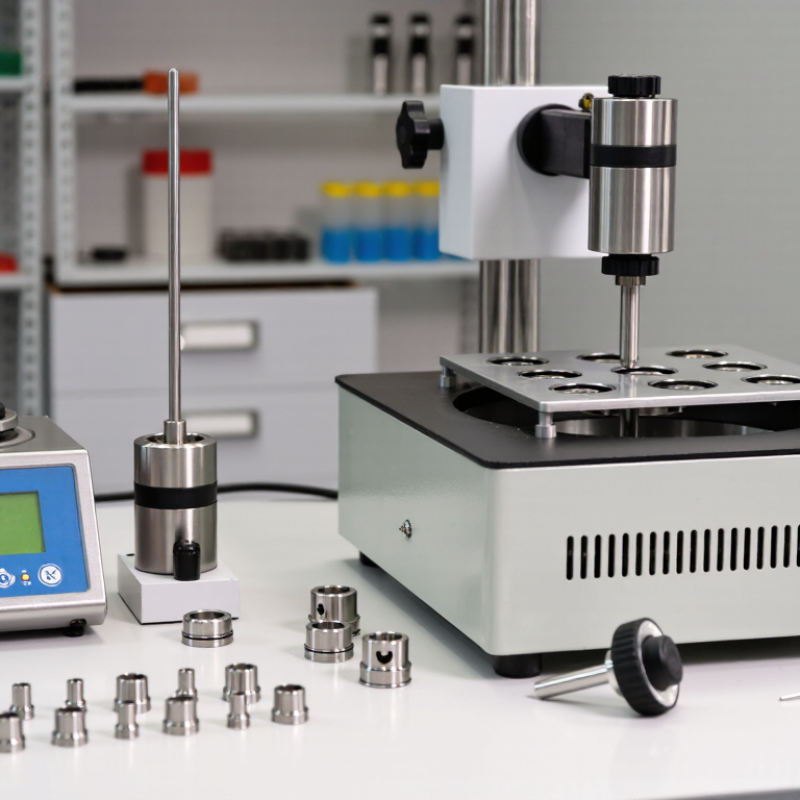
A block calibrator, also called a dry-well calibrator, creates a controlled temperature inside a metal insert. Place a temperature probe in a matching well, set the target temperature, and allow the block to stabilize. The calibrator’s display shows its sensor reading; it does not automatically prove the probe is accurate. For a reliable comparison, use a calibrated reference probe and keep both probes at similar depths. A small mismatch can matter.
The BIPM’s Guide to the Realization of the ITS-90 describes the international temperature scale over a range from 0.65 K to 1,357.77 K. That broad range is a reference framework, not a performance claim for any one calibrator. In practical use, check the unit’s stability, well-to-well uniformity, loading effect, and stated uncertainty near your working temperature. A polished display can still mislead. Room drafts, loose probe fit, or a rushed soak can shift readings.
Tips: Match the insert to the probe diameter, avoid forcing the probe, and wait for the reading to settle. Record the reference reading, block setting, probe depth, and ambient conditions. If the result seems oddly neat, repeat the check; measurement habits are not perfect.
Main Types of Block Calibrators Available in 2026
Block calibrators in 2026 generally fall into three practical types: portable dry-block units, high-stability laboratory units, and multi-zone or large-well systems. Portable models suit field checks, where a technician may need to compare a probe beside a process line. Interchangeable inserts accommodate different probe diameters, but poor contact can distort results. Small detail. High-stability units prioritize tight control and repeatability for calibration benches. Multi-zone systems help when calibrating several sensors or longer probes together, though they take more space and need careful loading.
Choose by temperature range, well depth, insert fit, stability, and uniformity—not the display’s resolution alone. NIST’s ITS-90 temperature scale covers 0.65 K to 1,358 K, a reference range far wider than most block calibrators. The useful range is the one matching the sensors’ actual working temperatures. EURAMET Calibration Guide No. 13 identifies stability, axial uniformity, and loading effects as key performance checks for temperature block calibrators. Those checks matter: placing a reference probe beside a test probe may not reveal a temperature gradient lower in the well.
A practical selection starts with the probe dimensions and a representative operating temperature. Then compare calibration uncertainty, not just the advertised set-point accuracy. A polished specification sheet can still hide real-world limitations. I would also check how often the unit needs verification; that detail is easy to overlook.
Key Accuracy, Temperature, and Traceability Specifications
Choosing the best block calibrator in 2026 starts with the accuracy your work actually requires. A display resolution of 0.1°C does not guarantee that the block is accurate to 0.1°C. Check the stated accuracy, stability, and measurement uncertainty across your operating range. A calibrator used near 100°C may perform differently at 500°C. That matters. Also consider well-to-well uniformity and how results change when using different insert sizes.
Temperature range is only part of the specification. Look for heating and cooling stability, warm-up time, and documented performance under realistic conditions. A tightly controlled laboratory is not the same as a drafty bench. Traceability matters too: review the calibration certificate, its measurement results, uncertainty, and connection to recognized standards. I would not rank a unit by its headline accuracy alone. Certificates and operating conditions deserve a closer look, and specifications can be less clear than they seem.
Tips: Check the probe diameter and insertion depth before ordering. Compare the certificate’s uncertainty with your tolerance, not just the displayed digits. Let the block stabilize, then verify it with a suitable reference probe. Keep a simple log of setpoint, ambient temperature, and readings. One caveat: a careful check takes time, but skipping it can leave a confident-looking number you cannot fully rely on.
How Block Calibrators Compare Across Common Applications
A block calibrator’s best fit depends on the work, not just its stated temperature range. In a maintenance shop, a compact unit can be easier to carry between equipment rooms. On a production line, quick warm-up and simple controls may matter more. A laboratory often needs steadier temperatures, suitable inserts, and documented performance. Small details count. A loose-fitting well can slow heat transfer and affect readings.
Tips: Match the insert to the probe’s diameter and shape. Check the required immersion depth. Compare stability and uniformity data, not only the display resolution. Keep calibration records current.
For field checks, portability may outweigh the tightest temperature control. For comparison work, repeatability and a traceable reference are more important. Check whether the calibrator covers the temperatures your sensors actually encounter. A very broad range is not automatically useful. Also consider cleaning, power options, and how easily operators can spot a poorly seated probe. Specifications do not tell the whole story; real workflows can expose awkward choices. I would compare units using the same probe, depth, and test points, then review the results before deciding.
How to Choose the Best Block Calibrator for Your Needs in 2026
Which Block Calibrator Is Best in 2026?
Choose a block calibrator by matching it to the temperature range and probes you actually use. A unit that reaches higher temperatures is not automatically better. Check its stability, display resolution, and stated accuracy across your working range. Fit matters. The well opening should suit your probe diameter, and the insertion depth should cover the sensor’s active section. Otherwise, readings may be misleading.
Tips: Compare the calibrator’s accuracy with the tolerance required for your instruments. Review calibration records and check whether the unit supports a traceable calibration service. For field work, consider weight, power options, and how quickly it stabilizes. A clear screen helps in dim workshops, too.
Think about workload before choosing. Frequent checks across several temperatures may justify a unit with multiple wells or interchangeable inserts. Occasional single-point checks may need a simpler setup. In practice, small details—like a loose probe fit or uneven contact—can matter more than a long feature list. Read the operating instructions, allow the specified stabilization time, and use a reference thermometer when the procedure calls for one. No calibrator removes the need for careful technique; that part is easy to underestimate.
